

TL;DR:
- An AI phone answering system for plumbers picks up missed calls, asks what the caller needs, and texts you a summary — it's not the same as voicemail or a call-forwarding service.
- Response speed matters more than most owners think: research on sales leads shows contact rates fall sharply once a callback takes more than a few minutes, and emergency plumbing calls are less patient than that.
- A typical subscription answering app runs $99–$250 a month, which adds up to $5,000–$9,000 over three years — a one-time purchase system can cost less than a single year of that.
- Multi-brand plumbers can run several phone numbers and Google Business Profiles through one system without paying per line or per site.
- True emergencies (gas smell, burst pipe flooding a ceiling) still need a live-transfer rule, because no AI system should be the only thing standing between a caller and a real person.
Table of Contents
- What an AI Phone Answering System for Plumbers Actually Does
- The Real Cost of a Missed Call, By the Numbers
- Subscription vs. One-Time Purchase: The Math Trades Owners Miss
- What Happens on the Call, Step by Step
- Multi-Brand Plumbers: One System, Several Phone Numbers
- When AI Answering Falls Short, and How to Catch It Early
- DIY Setup vs. Done-For-You: Choosing Your Week's Trade-off
- Where Answello Fits
- Frequently Asked Questions
- Sources
An AI phone answering system for plumbers is software that picks up calls you can't get to — because you're under a sink, on a roof, or driving between jobs — and turns each one into a text with the caller's name, number, and what they need, instead of a missed-call notification and a lost job. The real distinction that matters isn't "AI versus voicemail." It's whether you pay for that system once or feed it a subscription fee for as long as you're in business.
What an AI Phone Answering System for Plumbers Actually Does
Most tools marketed this way fall into one of three categories: a call-forwarding service that routes you to a pool of human operators, a voicemail transcription app, or an AI voice agent that actually holds a short conversation with the caller. Only the third kind does what a plumber needs most — find out if it's a burst pipe or a slow drain, get an address, and get that information to you before you've finished the job you're already on.
A properly built system answers after a set number of rings, confirms it's reached your business by name, asks what's happening and where, and gets a callback number even when the caller's own number won't display properly. That last part matters more than people assume — the Federal Communications Commission has documented how widespread robocall spoofing has become, which is part of why so many callers now hang up rather than leave a voicemail for a number they don't recognize. Once the call ends, you get a text with the caller's name, number, and a plain summary of the job. Recordings and transcripts sit in a dashboard if you want to review them later, which is worth doing for training or if a job description is disputed — see what business owners actually get from call transcription for what that looks like in practice.
The Real Cost of a Missed Call, By the Numbers
A missed call isn't a missed conversation — it's a job that goes to whoever answers next. A widely cited Harvard Business Review analysis of more than a million sales leads found that contact rates dropped sharply once callback time passed the first few minutes, and kept falling the longer a business waited. Plumbing calls are less patient than the leads in that study. A homeowner with water coming through a ceiling calls three or four numbers inside ten minutes and hires whoever picks up first.
BrightLocal's Local Consumer Review Survey has found for years that most people who can't reach a business by phone simply move to the next search result rather than leave a message and wait for a callback. For a plumber, that means every unanswered ring quietly trains your market to call the competitor first next time — not just this time.
Subscription vs. One-Time Purchase: The Math Trades Owners Miss
Most AI answering tools are sold as a monthly SaaS fee, usually somewhere between $99 and $250 a month once you add call minutes or extra numbers. That looks affordable next to a missed $2,000 job. It looks very different over three or five years, especially for an owner running more than one brand or number.
| Option | Upfront Cost | Monthly Cost | 3-Year Total | 5-Year Total |
|---|---|---|---|---|
| Typical subscription answering app | $0 | $150 | $5,400 | $9,000 |
| DIY self-install (one-time) | $399 | $0 | $399 | $399 |
| Done-for-you setup (one-time) | $895 | $0 | $895 | $895 |
| Done-for-you + optional maintenance plan | $895 | $119 (cancel anytime) | $5,179 | $8,035 |
These are the three pricing paths Answello offers, and the gap compounds fast — even the maintenance-plan option, which includes ongoing tuning, tends to land below a typical subscription over five years, and you can cancel the monthly part without losing the system itself. For a longer breakdown of why subscription answering tools structure pricing this way, see how to avoid monthly SaaS fees for call answering.
What Happens on the Call, Step by Step

The greeting and identification
The system answers on a set ring count — usually two to four — and identifies your business by name so the caller isn't left wondering if they dialed correctly. If you run several brands from different numbers, each line can greet with its own business name from the same underlying system.
Qualifying the job
The AI asks what's wrong, where the property is, and whether it's urgent. For plumbing specifically, this is where a good script earns its keep: distinguishing "tap's dripping" from "water's coming through the ceiling" changes whether the job needs a callback tonight or next Tuesday.
The text that lands in your pocket
Within moments of the call ending, you get a text with the caller's name, number, and a short summary of the job — enough to decide whether to call back between jobs or finish what you're doing first. The full recording and transcript stay available if you need to check exact wording later.
Multi-Brand Plumbers: One System, Several Phone Numbers
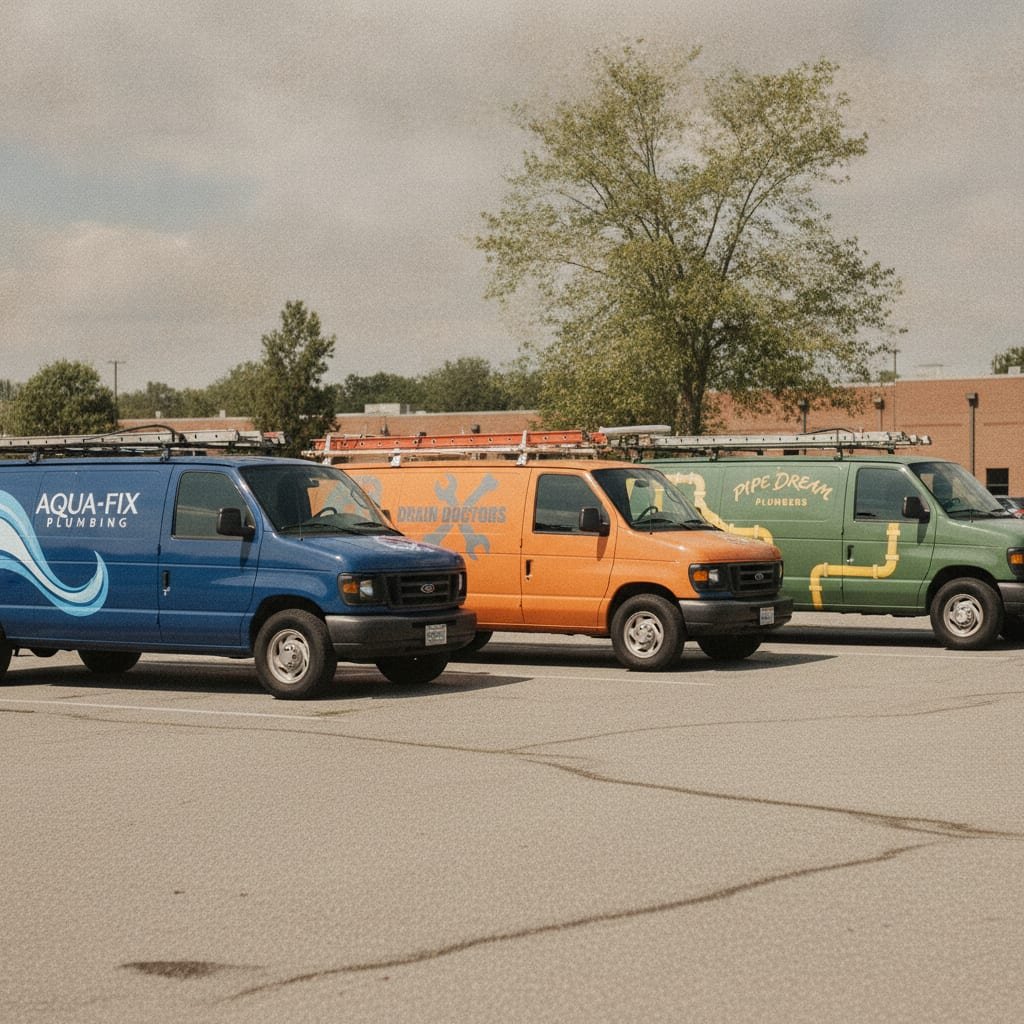
Many plumbing businesses aren't just one brand — an owner might run a general plumbing number, a separate drain-cleaning brand, and a hot water specialist line, each with its own Google Business Profile and phone number for local search reasons. Paying a per-line or per-site subscription for each of those adds up fast, and most SaaS answering tools are priced exactly that way.
A one-time-purchase system that supports multiple brands and numbers under a single setup avoids that multiplication. Each number can have its own greeting and script while sharing the same backend, so you're not buying three subscriptions to cover three business names. If you're comparing tools that claim to do this, check specifically whether multi-number support is included in the base price or sold as an add-on — see the comparison of missed-call text-back apps for how pricing structures differ across tools.
When AI Answering Falls Short, and How to Catch It Early
No AI phone system should be the only thing standing between a caller and help during a genuine emergency. Gas smells, burst pipes actively flooding a property, and hot water system failures in extreme weather need a rule that routes straight to a live person — either you, an on-call tech, or a real emergency line — rather than ending at a text you might not see for twenty minutes.
- Heavy accents or background noise. Speech recognition still struggles with construction-site noise or thick accents over a phone line, which can garble an address. Review transcripts weekly for the first month to catch this early.
- After-hours emergencies. Decide in advance whether after-hours calls trigger an SMS to you only, or an automatic call-through to whoever's on the roster that night.
- Non-native English callers. If a chunk of your customer base speaks English as a second language, test the system with real callers before relying on it, not just with a script read by staff.
Pro Tip: Before going live, record yourself calling in and asking for something in local trade slang and an oddly pronounced suburb name — a "blocked dunny" in a suburb locals mispronounce is a good test. Check the transcript against what a human receptionist would have written down. Mismatches here cause more missed information on dispatch than dropped calls ever do, and they're invisible until you go looking for them.
DIY Setup vs. Done-For-You: Choosing Your Week's Trade-off
A self-install package is cheaper upfront and gives you full control over the script, but it costs your time — usually a few hours to configure the greeting, questions, and routing rules correctly. A done-for-you setup costs more upfront but arrives with a script written for how plumbing calls actually go, configured by someone who's done it before, which matters if you'd rather spend that afternoon on a job than on software settings.
The optional monthly maintenance plan sits on top of either path. It's not required to keep the system working, but it covers ongoing tuning as your call patterns shift — new suburbs, new services, a script line that isn't landing well with callers. Because it's cancel-anytime rather than a locked contract, it functions more like an insurance policy than a subscription trap.
Where Answello Fits
Answello is built specifically for this trade-off: a one-time-purchase AI phone answering system rather than a per-month, per-site subscription, with DIY ($399), done-for-you ($895), and optional maintenance ($119/month, cancel anytime) options covering both ends of the setup-time-versus-cost decision. It's aimed at plumbers and other trades running one number or several brands who want the missed-call problem solved without adding another recurring bill to the business.
Frequently Asked Questions
How is an AI phone answering system different from a regular answering service?
A traditional answering service routes your call to a human operator working from a script, usually billed per minute or per call. An AI phone answering system uses voice recognition to hold the conversation itself and texts you a summary immediately afterward, with no per-minute staffing cost behind it.
Will callers know they're talking to an AI?
Most systems identify themselves honestly at the start of the call, and callers generally care more about getting an answer quickly than about who or what answers. Plumbing callers in particular tend to hang up on unanswered rings well before they'd object to a well-scripted AI greeting.
Can one system handle multiple business brands or phone numbers?
Yes, as long as the system is built to support it — each number can have its own greeting and script while running on the same underlying setup. Check whether a tool prices this as included or as a separate per-number add-on before buying.
What happens if a real emergency call comes in?
A well-configured system should recognize emergency language, such as a gas smell or active flooding, and route that call to a live person immediately rather than ending with a text notification. This rule needs to be set deliberately during setup, not assumed.
Is a one-time purchase system actually cheaper than a monthly subscription?
Over three to five years, yes, in most comparisons — a typical subscription answering app running $99 to $250 a month totals $3,500 to $15,000 over five years, while a one-time purchase system costs a fraction of that even with an optional monthly maintenance add-on.
Sources
- The Short Life of Online Sales Leads | Harvard Business Review
- Local Consumer Review Survey | BrightLocal
- Stop Unwanted Robocalls and Texts | Federal Communications Commission
Leave a Reply