
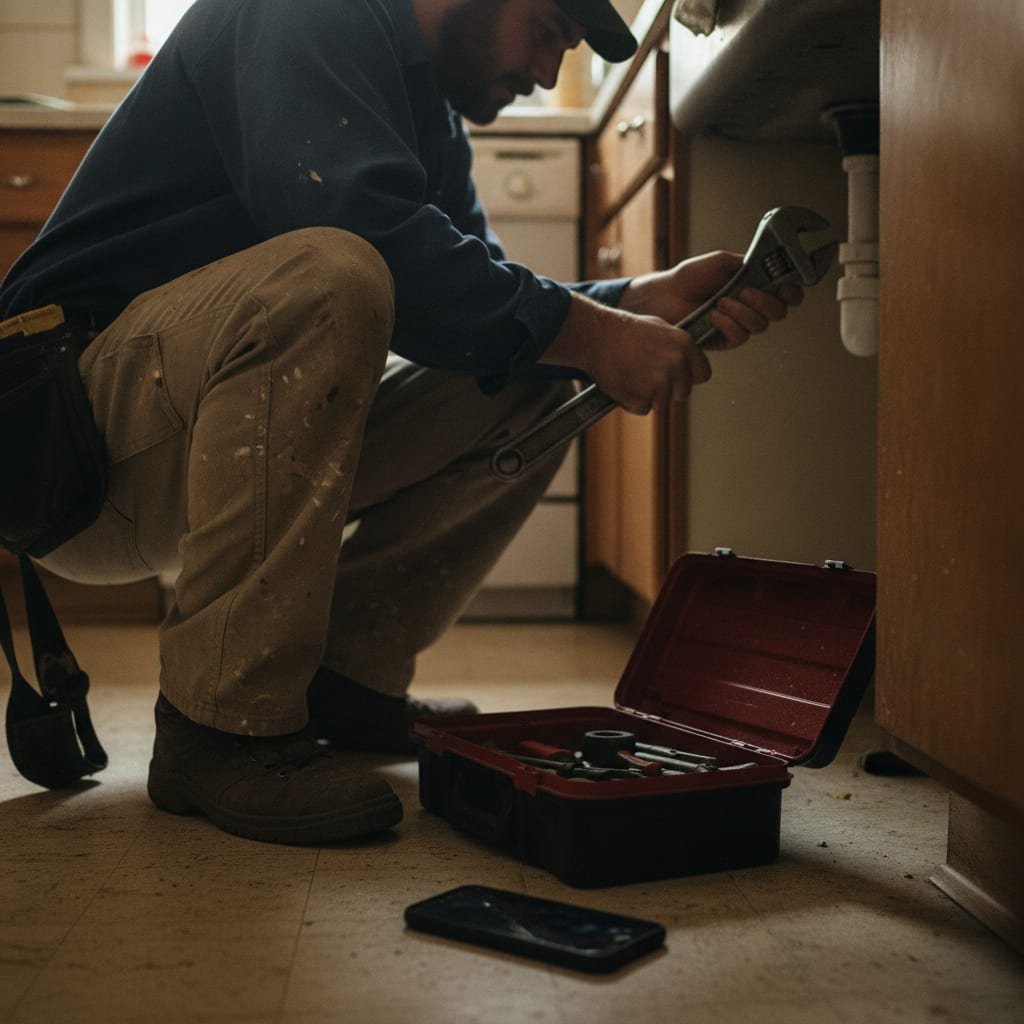
24/7 call answering for small business means every call gets picked up and triaged — day, night, and weekend — without you or an employee being the one who has to answer it. The distinction that matters isn't whether someone answers, it's what you pay for that coverage: a human call center billed by the minute, a software subscription billed every month, or a system you buy once and own. Pick wrong and you either overpay for calls you never needed covered, or underpay for the one call that would have paid your mortgage.
TL;DR:
- Most "missed calls" aren't emergencies — they're new customers who won't call back, and industry research puts that cost in the thousands per year for a typical trade business.
- Human answering services charge per minute or per call and get expensive fast once volume climbs past a few dozen calls a month.
- AI answering systems now handle the first 60 seconds — name, number, reason for calling — as well as a person, for a fraction of the ongoing cost.
- Subscriptions compound: $200/month for one line, repeated across three brands or numbers, adds up to thousands a year for something you could own outright.
- A one-time-purchase system makes sense if you want coverage without a recurring bill you have to remember to cancel.
Table of Contents
- What 24/7 Call Answering Actually Buys You (and What It Doesn't)
- The Real Cost of a Missed Call, by the Numbers
- Three Ways to Cover Calls After Hours, and Who Each One Fits
- Human Service vs. AI Answering: What Changes at 2 a.m.
- Subscriptions vs. One-Time Purchase: Where Your Money Actually Goes
- Multi-Brand and Multi-Number Businesses Need a Different Setup
- Call Recording, Consent, and the Legal Fine Print You Can't Skip
- Get Your Calls Answered Without Adding Another Monthly Bill
- Frequently Asked Questions
- Sources
What 24/7 Call Answering Actually Buys You (and What It Doesn't)
Round-the-clock answering solves one specific problem: the gap between when your phone rings and when a human being in your business can pick it up. It does not fix a bad website, a slow quote process, or a technician who shows up late. Buyers often conflate the two and end up disappointed with a service that was never meant to close the deal — just to stop the call from going to voicemail.
What a 24/7 system should guarantee is simple and narrow: the caller gets a response, their name and number get captured, and their reason for calling gets recorded somewhere you can see it before you call back. Everything past that — booking the job, quoting the price, handling a complaint — is still your job or your staff's. The question worth asking a vendor isn't "do you answer calls," it's "what exactly happens to the information after the call ends, and how fast does it reach me."
The Real Cost of a Missed Call, by the Numbers
Most missed calls aren't emergencies. They're a homeowner with a leak, a property manager with three quotes already lined up, or a referral who will simply call the next name on the list if no one picks up. Invoca, which tracks call data for service businesses, has repeatedly found that phone calls convert to paying customers at a noticeably higher rate than web forms — which is exactly why losing them is expensive, not just annoying.
A single missed job in the trades is rarely worth tens of dollars. It's worth the full ticket price of the service call, because the customer doesn't wait — they call the next business on the list.
BrightLocal's ongoing local consumer research has found that phone calls remain one of the most common ways people choose to contact a local business, especially for anything urgent — a burst pipe, a locked door, a tree on a car. Those are exactly the calls that come in outside normal hours, when a missed call is most likely to become a lost job rather than a minor inconvenience. For a fuller breakdown of what this actually costs over a year, see What Unanswered Phone Calls Really Cost Your Business.
Three Ways to Cover Calls After Hours, and Who Each One Fits

There are really only three paths to 24/7 coverage, and each one fits a different kind of business.
Hire a Human Answering Service
Best for businesses with complex, varied calls. A live answering service, staffed by real people, handles nuance well — angry customers, unusual requests, multi-step intake forms. It's also the most expensive option per call, typically billed by the minute, and quality varies a lot depending on whether the agent actually knows your business or is reading a generic script. For the full cost breakdown of this model, see 24-Hour Answering Service: What It Costs and How It Works.
Use an AI Answering System
Best for businesses whose after-hours calls follow a predictable pattern. Most trades calls — plumbing, HVAC, locksmith, pest control — ask one of a handful of questions and need one of a handful of answers. AI systems are now good enough to handle that first exchange: capture the name, number, and reason for the call, and text it straight to the owner. They don't handle genuinely novel situations well, but most after-hours calls aren't novel.
Set Up Automatic Text-Back
Best as a stopgap, not a solution. An automated text reply that fires the moment a call is missed buys you a few minutes of goodwill, but it doesn't capture what the caller actually needs. It's a patch, not a system. Automatic Text Reply: What It Can (and Can't) Do covers exactly where this option runs out of road.
Human Service vs. AI Answering: What Changes at 2 a.m.
The difference between these two options is sharpest outside business hours, when a human service is routing your call to someone working a graveyard shift across multiple accounts, and an AI system is running the exact same script it runs at noon.
| Factor | Human Answering Service | AI Answering System |
|---|---|---|
| Typical pricing | Per-minute or per-call, billed monthly | One-time purchase, optional monthly tuning plan |
| Handles unusual requests | Yes, with real judgment | Limited — escalates or logs for callback |
| Consistency at 2 a.m. | Depends on agent and call volume that night | Identical every time |
| Setup time | Days to weeks (scripts, training) | Hours to a few days |
| Scales to multiple brands/numbers | Usually priced per line | Often bundled under one purchase |
Pro Tip: Ask any answering service — human or AI — what happens when a caller asks a question that isn't in the script. The honest answer should be "we capture it and get it to you fast," not a vague promise that the system "handles most situations." If you can't get a straight answer to that one question, assume the gaps are bigger than they're letting on.
Subscriptions vs. One-Time Purchase: Where Your Money Actually Goes
Most answering solutions, human or AI, are sold as a monthly subscription — often per phone line. That model makes sense for the vendor: predictable recurring revenue, easy to price per minute or per seat. It makes a lot less sense for a small trades business running one or two numbers for years at a time, where the same recurring fee gets paid out in month 40 as it did in month one, long after the setup cost should have been recovered.
Run the math over three years. A $150-a-month subscription costs $5,400 over that period. A one-time purchase at $895, even with an optional $119-a-month tuning plan layered on top for active months, costs a fraction of that if you only keep the plan running part of the time — and nothing at all in the months you cancel it. Flat-rate and subscription models both have a place, and Flat Rate Phone Answering Service: Real Costs, Real Trade-offs walks through when a flat monthly fee actually beats a per-minute one. But "flat" and "free of ongoing cost" are not the same thing, and it's worth being clear-eyed about which one you're buying.
Multi-Brand and Multi-Number Businesses Need a Different Setup
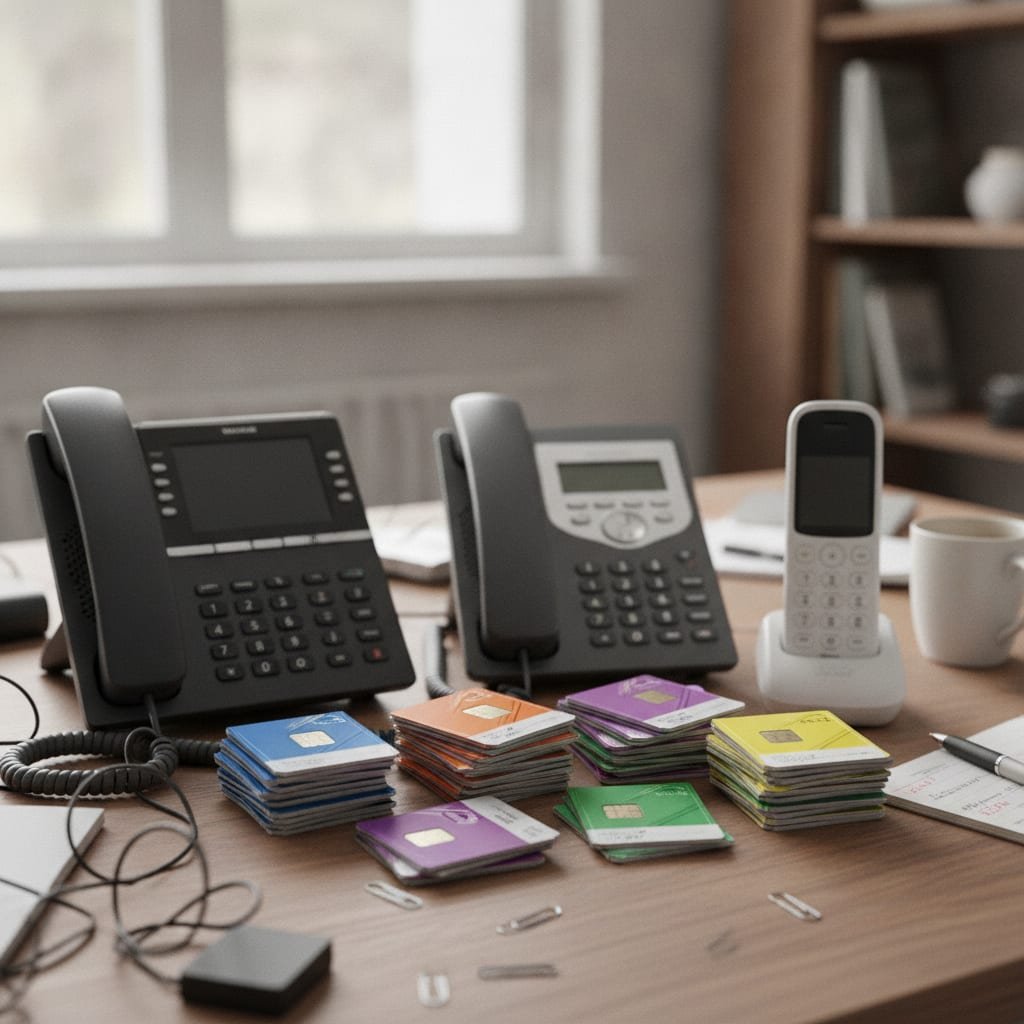
If you operate under more than one brand name, or run separate numbers for different service lines, most answering services will quote you per line — which means the subscription math above gets multiplied by however many numbers you're running. A business with three service brands on three numbers, each at $150 a month, is paying $5,400 a year just to have calls picked up, before a single job is booked.
This is where the subscription model breaks down fastest for trades businesses that have grown past a single van and a single phone number. A setup priced per number punishes exactly the kind of growth you want — adding a second brand, splitting residential from commercial, running a separate emergency line. Any system worth buying for a multi-brand operation should let you cover every number under one purchase, not one invoice per line.
Call Recording, Consent, and the Legal Fine Print You Can't Skip

Any 24/7 answering setup that records calls or texts caller details needs to account for consent law, and this is one area where "set it up and forget it" will get you in trouble. In the United States, most states allow one-party consent to record a call — meaning your business can record without the caller's explicit agreement. But roughly a dozen states, including California and Florida, require all-party consent, which means your greeting needs to disclose that the call may be recorded before the conversation continues.
One-party consent is the default in most U.S. states. About a dozen, including California and Florida, require every participant on the call to agree before it can legally be recorded.
Outside the U.S., rules vary by country and often align with broader data protection law — the EU's GDPR framework, for instance, treats a recorded phone call as personal data subject to the same consent and storage obligations as any other customer record. Whatever system you choose, confirm the disclosure happens automatically on every call, not just the ones someone remembers to flag.
Get Your Calls Answered Without Adding Another Monthly Bill
Answello is built for exactly the business this article describes: a trades or multi-brand operation that loses jobs to missed calls but doesn't want a new subscription line item for the rest of its life. It answers missed calls with AI, captures the caller's name, number, and what they need, and texts you the summary and transcript before you've finished the job you were on. A do-it-yourself setup runs $399 once; a fully configured version with a custom script for your business is $895 once; an optional $119-a-month plan keeps the script tuned if you want ongoing adjustments, and you can cancel it anytime without losing the system itself. It covers multiple brands and numbers under a single purchase — no per-line pricing. The honest caveat: it's built for the first-response job, not for replacing a dispatcher who handles complex scheduling live; check the spec sheet to confirm it matches how your calls actually run before you buy.
Frequently Asked Questions
What does "24/7 call answering" mean if no human is actually on the phone?
It means every incoming call is picked up and triaged immediately, whether that's by a live agent or an AI system, so the caller never hits voicemail. The caller's name, number, and reason for calling get captured and sent to you, even at 3 a.m., so you can call back with full context instead of a missed-call notification and nothing else.
Is a human answering service always better than an AI one?
Not always — human agents handle unusual or emotional situations better, but they cost more per call and quality varies by agent and shift. For the repetitive, predictable calls most trades businesses get after hours, AI systems now perform comparably at a much lower ongoing cost.
How much does 24/7 call answering typically cost?
Human answering services usually bill by the minute or per call, often landing between $100 and $300+ a month depending on volume. AI-based systems are increasingly sold as a one-time purchase, sometimes with an optional monthly tuning plan, which can cost far less over several years than a recurring per-line subscription.
Do I need caller consent to record after-hours calls?
Yes, in some states. Most U.S. states allow one-party consent, but roughly a dozen — including California and Florida — require every party to agree before a call can be recorded, so your greeting needs a disclosure if you operate in or call those states.
Can one system cover multiple business brands or phone numbers?
Some can, but many answering services price by the line, meaning a three-number operation pays three times over. If you run multiple brands, look specifically for a system priced as a single purchase or plan that covers all your numbers, rather than one invoice per line.
Sources
- BrightLocal Local Consumer Review Survey | BrightLocal
- Call Tracking and Conversion Research | Invoca
- General Data Protection Regulation (GDPR) | European Commission
- Federal Communications Commission Consumer Guides | FCC
Leave a Reply