
TL;DR:
- An after hours phone answering service is any system — human, automated, or AI — that answers calls when your business is closed and passes the details along.
- Human answering services typically bill $1–$2 per minute or per call, while AI systems increasingly use flat or one-time pricing instead of a monthly meter.
- "Free" after hours answering almost always means a free trial that converts to a paid subscription, or basic voicemail transcription bundled with your phone carrier.
- Traditional telephone answering services still operate and remain useful for high call volumes or complex triage, but they now compete against AI receptionists on cost and speed.
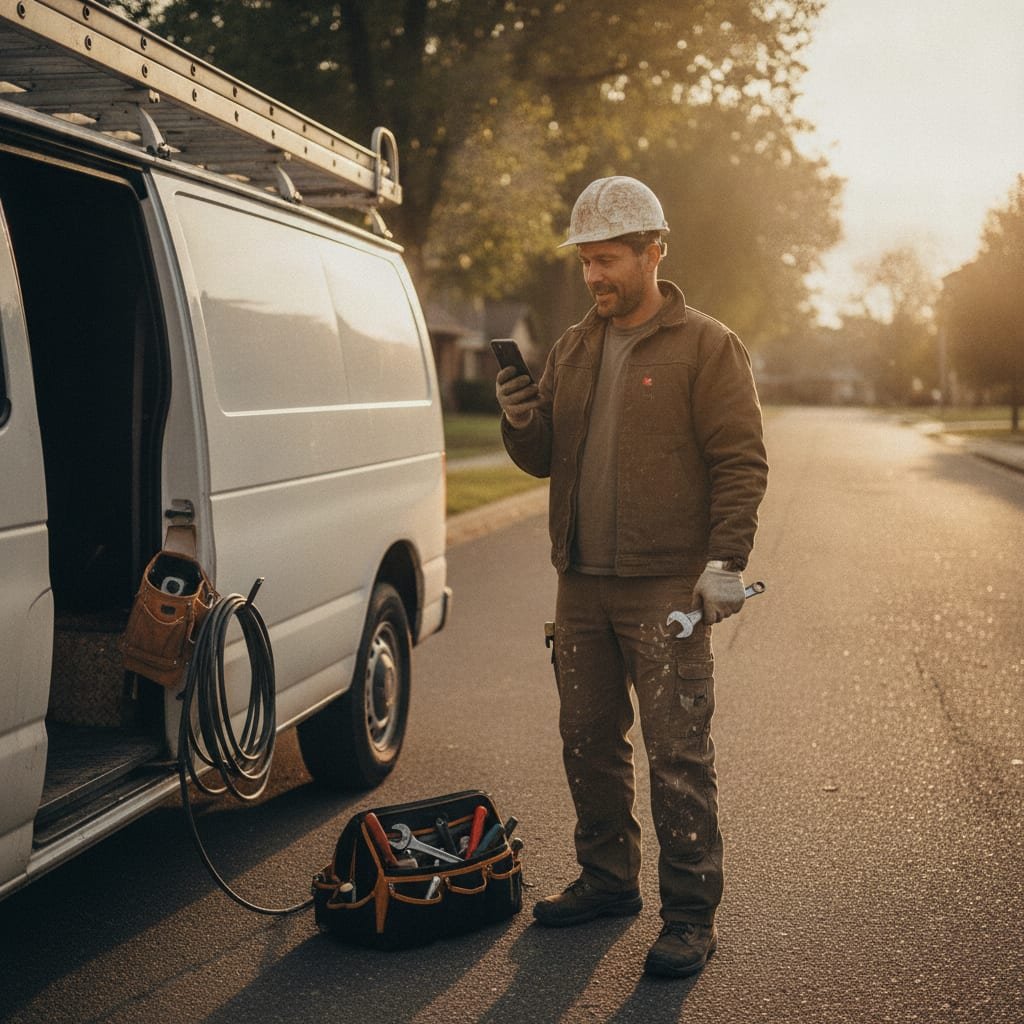
- For a trades business that misses calls sporadically rather than constantly, a one-time-purchase AI system usually beats paying a monthly per-minute service for coverage it barely uses.
Table of Contents
- What an After Hours Phone Answering Service Actually Does
- Human Agents vs. AI Receptionists: Where the Real Difference Shows Up
- What It Costs: Per-Minute Billing vs. Flat and One-Time Pricing
- Is There a Free After Hours Answering Service?
- Do Telephone Answering Services Still Exist, and Who Actually Needs One?
- Finding the Best After Hours Answering Service for a Small Trades Business
- Where Answello Fits
- Frequently Asked Questions
- Sources
An after hours phone answering service is anyone or anything that picks up your business line once your team goes home — a live remote agent, an automated voicemail-to-text system, or an AI receptionist that can actually hold a conversation. The distinction that matters isn't day-versus-night coverage; it's what happens to the caller's information after the call ends, and whether it reaches you fast enough to still win the job.
What an After Hours Phone Answering Service Actually Does
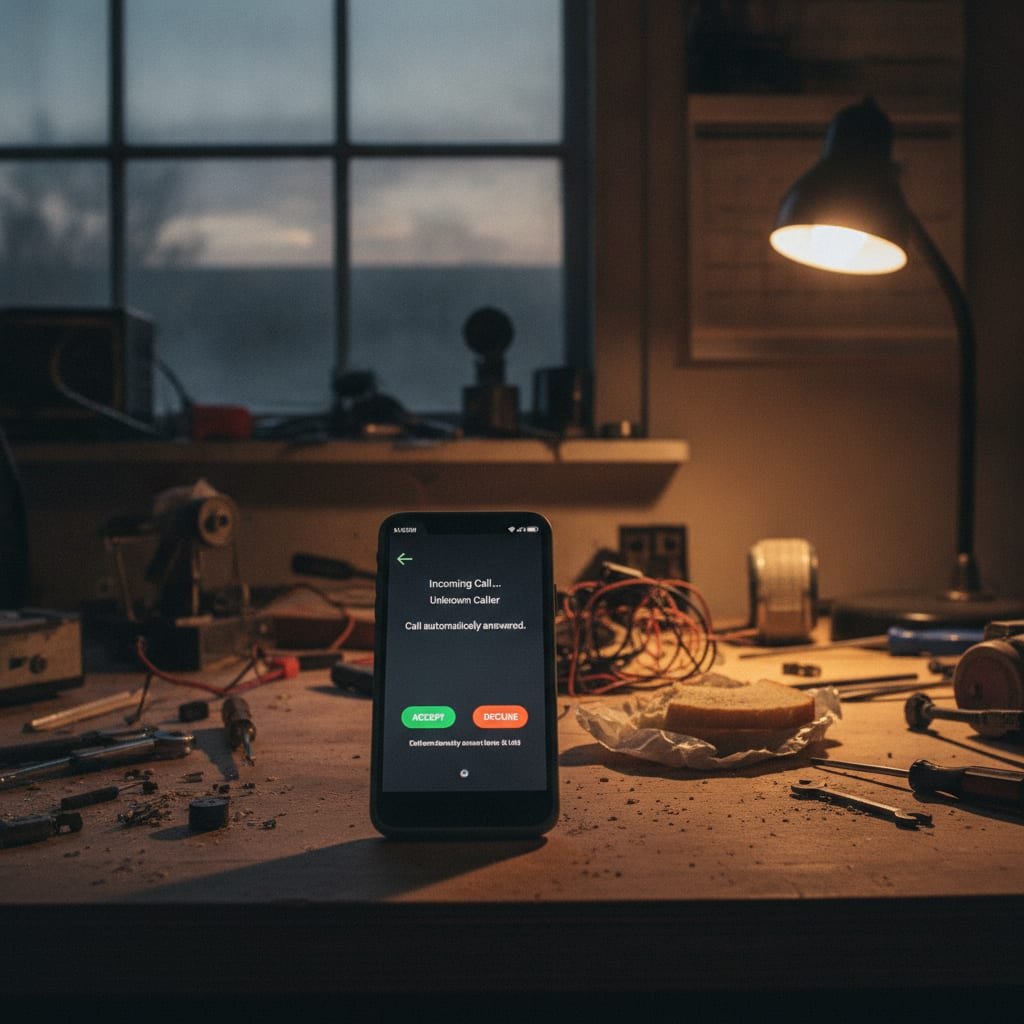
Strip away the marketing and there are really three tiers. The first is passive: a voicemail box that records a message and waits for you to check it, sometimes hours later. The second is a live human answering service, where a remote agent in a call center picks up on your business's behalf, follows a script, and relays a message by text, email, or a portal. The third is an AI answering service, which uses a voice model to greet the caller by your business name, ask the questions you'd ask, and text you a summary and transcript within seconds of the call ending.
What separates a good after hours setup from a bad one isn't whether it's staffed by a person or a machine — it's speed and specificity. A caller who hears "please leave a message" hangs up and calls the next name on their list more often than not. A system that identifies who called, what they need, and texts you before you've finished your dinner is the one that actually converts. If you want a deeper look at how the AI version handles that handoff, this breakdown of AI answering services walks through it call by call.
Human Agents vs. AI Receptionists: Where the Real Difference Shows Up
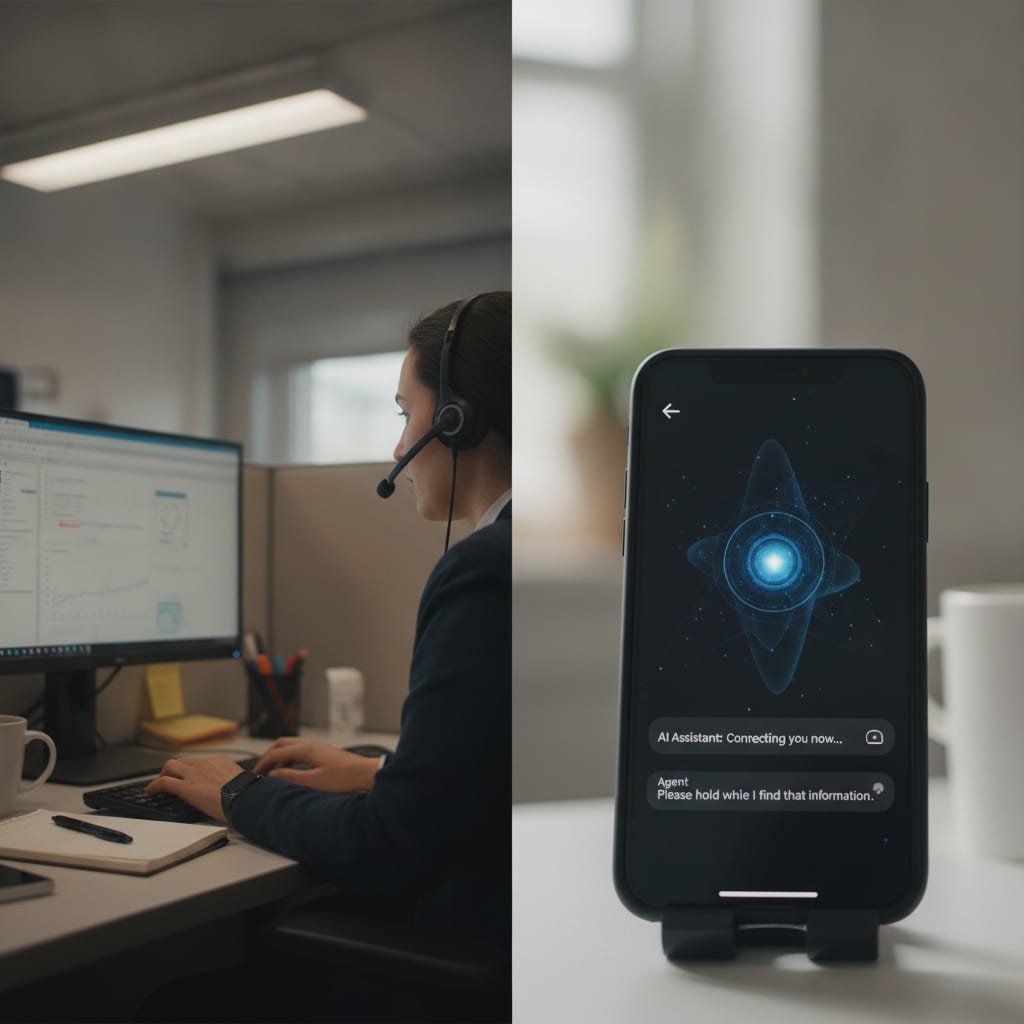
Human answering services are staffed by trained agents who can improvise, calm down an upset caller, and handle genuinely unusual requests — that flexibility is real and it's the reason law firms, medical practices, and property managers still use them heavily. But that same flexibility is expensive to scale: every additional minute on the phone is another line item on your invoice, and quality varies by which agent happens to answer that night.
AI receptionists trade some of that improvisational range for consistency and speed. They don't get tired at 11 p.m., they don't need a supervisor to check their scripts, and once configured, every caller gets the identical, correct greeting for your business — which matters more than it sounds like if you run two or three brands out of one phone system. The trade-off is that an AI system is only as good as its setup; a poorly configured one will mishandle edge cases a human would have caught instinctively.
Pro Tip: Before you sign anything, ask the provider how they handle a call that comes in at 1 p.m. while you're already on another job, not just a call at 2 a.m. Most services marketed as "after hours" quietly exclude daytime overflow, and for a trades business, the calls you miss while your hands are full during business hours cost you just as many jobs as the ones that come in overnight.
What It Costs: Per-Minute Billing vs. Flat and One-Time Pricing
Cost is where the category splits hardest, and it's worth seeing the models side by side before you commit to one.
| Model | Typical Pricing | Best Fit | Watch For |
|---|---|---|---|
| Carrier voicemail | Free, bundled with your phone plan | Solo operators who rarely miss calls | No caller name, no urgency flag — you find out only when you check messages |
| Live human answering service | $1–$2 per minute, or $250–$600/month for a bundled call block | High call volume, medical or legal triage needs | Costs scale with every busy month; many require 12-month contracts |
| AI answering, subscription model | $50–$300/month per phone number | Multi-location brands needing frequent script changes | The bill never stops, even in a slow month with almost no missed calls |
| AI answering, one-time purchase | $399–$895 paid once, with optional $119/month upkeep | Trades businesses with seasonal or unpredictable call spikes | Requires more upfront setup than a plug-and-play monthly vendor |
Most of the pages you'll find comparing "the best after hours phone answering service" are comparing vendors inside a single row of that table — usually the subscription row — without mentioning that a one-time model exists at all. If your call volume is inconsistent, paying a flat monthly fee for capacity you use three nights a month is the more expensive habit, not the safer one.
Is There a Free After Hours Answering Service?
Not really, and it's worth being specific about why. Carrier voicemail is free but gives you nothing beyond a recorded message you have to retrieve yourself. Many answering service companies advertise a free trial — typically 7 to 14 days — that converts automatically into a paid monthly plan unless you cancel. The Federal Trade Commission's Negative Option Rule specifically governs this kind of auto-renewing offer, requiring companies to make cancellation as easy as sign-up, precisely because so many "free" trials are built to be forgotten about until the first real charge hits.
If you're searching for a genuinely free after hours phone answering service for an ongoing business, you're really searching for a workaround: your phone carrier's built-in voicemail-to-text feature, or a basic call-forwarding rule to a partner or family member during specific hours. Neither replaces a real triage system, but both cost nothing and beat a silent ringtone.
Do Telephone Answering Services Still Exist, and Who Actually Needs One?
Yes — the traditional, human-staffed telephone answering service industry is very much alive, and it predates almost every other customer-communication tool still in use today. Medical practices, funeral homes, property managers, and law firms are the industries most likely to keep a live service on retainer, mostly because their calls involve emotionally sensitive or legally specific situations that benefit from a trained person's judgment in the moment.
Who Staffs These Services
The people answering those calls are classified by the U.S. Bureau of Labor Statistics under "Switchboard Operators, Including Answering Service," a distinct occupational category with its own wage and employment data tracked nationally. It's a real, ongoing profession — which answers a related question people search alongside this topic ("after hours phone answering service jobs"): yes, these are actual remote and in-office roles, generally paid on an hourly basis, and hiring for them continues even as more of the call volume shifts toward AI-assisted systems.
Where They're Losing Ground
Where traditional services are losing share is with small, single-location trades businesses that don't have the call volume or legal complexity to justify per-minute billing. A plumber who misses four calls a week doesn't need a switchboard operator on retainer; he needs those four calls captured and forwarded without a monthly invoice attached. That's the gap AI answering tools were built to fill, and it's covered in more detail in this guide to what AI phone answering actually costs.
Finding the Best After Hours Answering Service for a Small Trades Business
Searching "after hours phone answering service near me" usually turns up national call centers with local area codes, not genuinely local operators — most live answering services route your calls to agents in a shared facility regardless of where your business sits. That's not a problem by itself, but it does mean "near me" isn't really the filter that matters. The filter that matters is whether the service recognizes your specific business, your specific brands, and your specific job types, rather than reading from a generic script.
This is also where "personal answering service" searches usually lead people astray. A personal answering service — one built around a single owner-operator's voice and preferences rather than a call center's average script — tends to perform better for trades businesses precisely because callers can tell the difference between a generic greeting and one that sounds like it belongs to the company they called. If you run more than one brand under one roof, look specifically at how a provider handles multiple numbers routing into a single system rather than assuming every plan supports it by default — many subscription services charge per number, which erases the savings fast.
For a solo trades operator, the shortlist that matters is short: does it identify the caller, does it capture the job details accurately, does it reach you within a minute or two, and does the pricing model match how often you actually miss calls. Everything else is a feature, not a requirement.
Where Answello Fits
Answello was built specifically for the gap described above: a trades or multi-brand small business that misses calls unpredictably and doesn't want a monthly per-minute meter running in the background. It's a one-time-purchase AI answering system — $399 for a self-install package, $895 for a fully configured version with a custom script — that identifies the caller, captures what they need, and texts you a summary and transcript. An optional $119/month plan covers ongoing tuning if you want it, but nothing about the core system requires an ongoing subscription to keep working.
Frequently Asked Questions
What is an after hours phone answering service?
It's any system — a live human agent, an automated voicemail, or an AI receptionist — that answers your business calls outside normal hours and passes along who called and why. The best versions identify the caller and their need immediately and deliver that information to you within minutes, rather than leaving you to check messages later.
How much does it cost to hire an answering service?
Live human answering services typically charge $1 to $2 per minute or bundle a block of calls into a $250–$600 monthly plan, often with a 12-month contract. AI answering services run $50–$300 per month per number as a subscription, or can be purchased once for roughly $399–$895 with no recurring fee required.
Is there a free answering service available?
Carrier voicemail is free but only records a message without identifying the caller's need or urgency. Most answering services marketed as free are trial offers that auto-convert to a paid subscription, which is why the Federal Trade Commission's Negative Option Rule requires companies to make cancellation just as easy as sign-up.
Do telephone answering services still exist?
Yes. Live, human-staffed telephone answering services remain common in medicine, law, and property management, and the U.S. Bureau of Labor Statistics still tracks switchboard and answering service operators as an active occupation. They're simply losing ground with small, low-volume businesses to flat-fee and one-time AI alternatives.
What does an after hours phone answering service job involve?
These are typically hourly, often remote, roles where an agent answers calls on behalf of multiple client businesses following individual scripts, then logs or forwards messages. The role is classified by the U.S. Bureau of Labor Statistics under switchboard operators, including answering service, and hiring continues alongside the growth of AI-based alternatives.
What's the real difference between a live answering service and an AI receptionist?
A live service offers human judgment and improvisation but bills by the minute, so costs rise with every busy month. An AI receptionist delivers a consistent, correctly scripted greeting every time and can be priced as a flat or one-time cost, though it depends entirely on how well it was configured for your specific business.
Sources
- Occupational Employment and Wage Statistics | U.S. Bureau of Labor Statistics
- Negative Option Rule | Federal Trade Commission
- BBB Scam Tracker | Better Business Bureau
- Small Business Administration | U.S. Small Business Administration
Leave a Reply