
An AI call answering service picks up calls your business misses, talks to the caller with a voice model instead of a recording, and sends you a text with who called and why. The real distinction between the options on the market isn't how smart the voice sounds — it's whether you're paying for that service every month forever or buying the system once. Most are subscriptions billed per phone line. A smaller number are sold as a one-time purchase instead.
TL;DR:
- An AI call answering service answers and qualifies a call instead of just recording it, then texts you a summary — that's the gap between this and voicemail.
- Most providers bill monthly per phone line, which multiplies fast if you run more than one number or brand.
- A one-time purchase model exists and typically runs $399–$895 depending on whether you self-install or want it fully configured.
- Research on lead response time backs up why speed matters more than people assume — a reply within the hour, not the next morning, decides whether a caller tries you again.
- Before buying, check how it handles multiple numbers, whether it texts a real summary or just a transcript, and how much the script can be customized.
Table of Contents
- What Makes an AI Call Answering Service Different From Voicemail or a Live Receptionist
- The Subscription Trap: How Monthly AI Call Answering Fees Compare to a One-Time Purchase
- What a Missed Call Actually Costs a Trade Business
- What to Look For Before You Buy
- Red Flags That Mean You're Buying a Subscription With Extra Steps
- Get Every Missed Call Turned Into a Text You Can Act On
- Frequently Asked Questions
- Sources
What Makes an AI Call Answering Service Different From Voicemail or a Live Receptionist
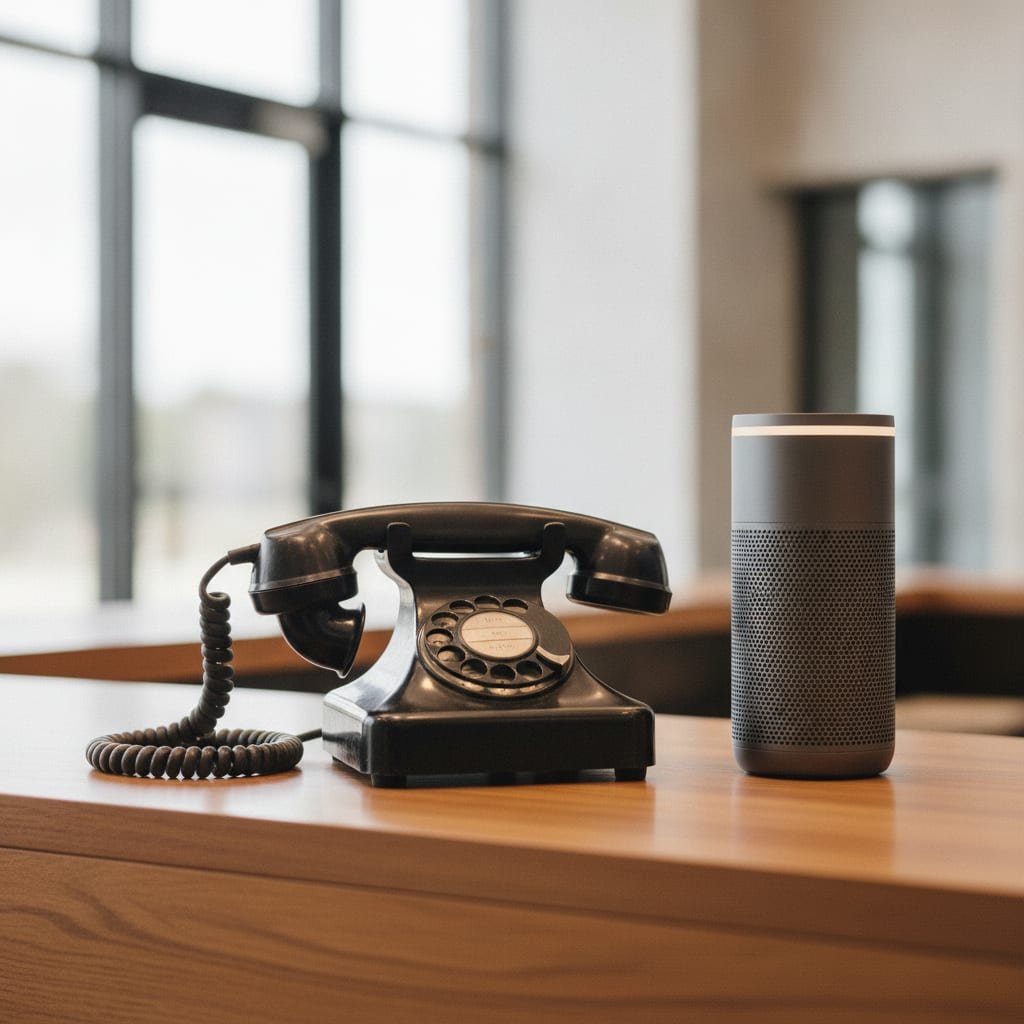
Voicemail doesn't answer anything — it records a complaint and hopes you call back before the customer finds someone else. A live receptionist or traditional answering service fixes that, but it's a person on a per-minute or per-call rate, available only during the hours you've paid for, repeating the same scripted questions on every job type you offer.
An AI call answering service sits between those two. It picks up on the first or second ring, uses a voice model instead of a recording to ask what the caller needs, and then sends the business owner a text with the caller's name, number, and request — sometimes with a full transcript or recording attached. The caller gets a real exchange instead of a beep. You get the job details before you've even wiped your hands.
The quality gap between providers is almost entirely about what happens after the call, not during it. A system that just transcribes a voicemail-style message and texts it to you verbatim isn't doing much more than voicemail with extra steps. One that extracts the caller's name, the problem, the urgency, and the address, and puts that in a clean text, is actually saving you a callback.
The Subscription Trap: How Monthly AI Call Answering Fees Compare to a One-Time Purchase
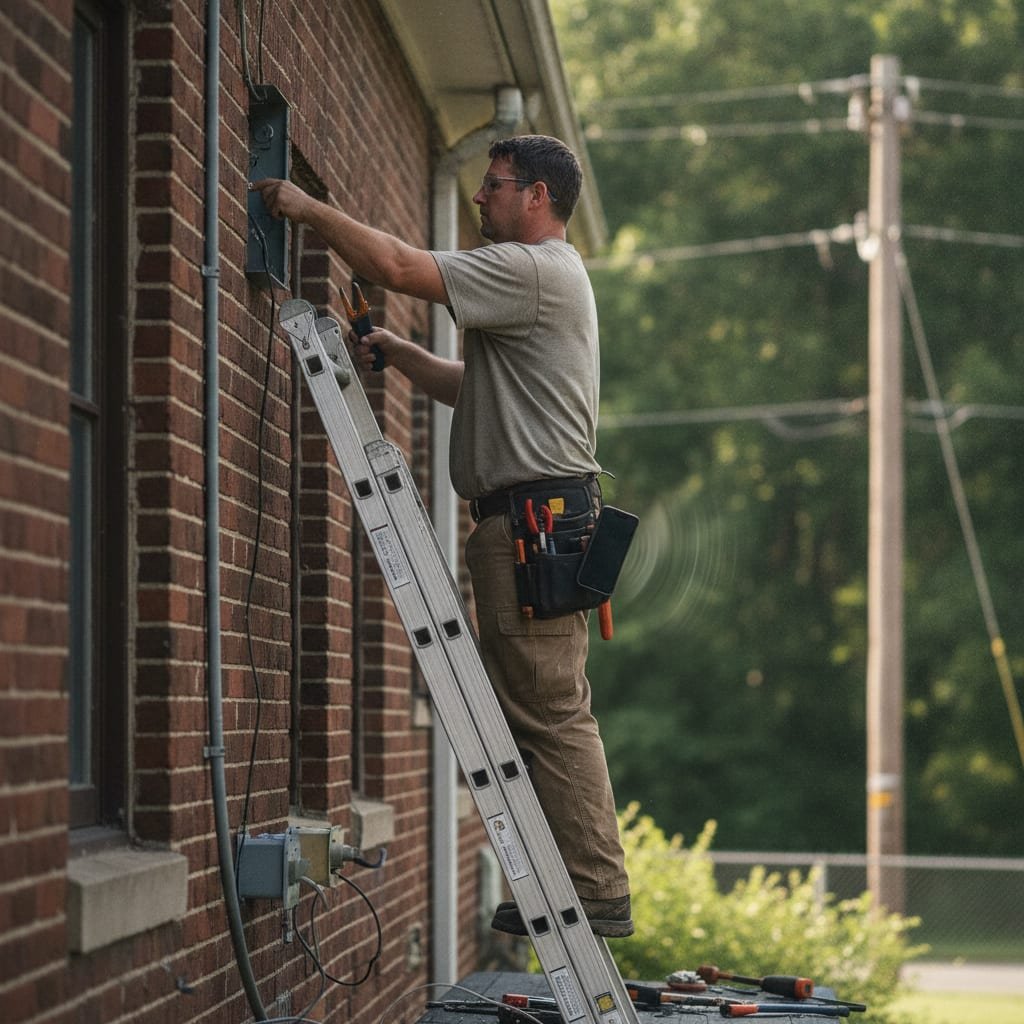
Most AI call answering services on the market are billed the way software usually is — a recurring monthly fee per phone number, often $200 to $500, scaled up if you add lines, minutes, or brands. That's fine if you run one number and don't mind the ongoing bill. It gets expensive fast if you're a multi-brand operation running separate numbers for plumbing, HVAC, and a side business under one roof, because most providers charge you per line, not per owner.
The alternative is a one-time purchase: you pay once for the system, optionally pay again for a lighter monthly tuning plan if you want ongoing changes made for you, and otherwise owe nothing. Our related breakdown of subscription business software walks through why so many small-business tools default to recurring billing even when the underlying service doesn't cost the vendor more to keep running — it's a pricing choice, not a technical requirement.
Here's what that looks like over five years, assuming a single owner running two business numbers:
| Pricing model | Setup cost | Monthly cost | Approx. 5-year total (2 numbers) |
|---|---|---|---|
| Subscription AI answering, billed per line | $0–$50 | $250–$400/line | $30,000–$48,000 |
| One-time purchase, self-install | $399–$798 (if billed per brand) | $0 | $399–$798 |
| One-time purchase, fully configured | $895–$1,790 | $0 | $895–$1,790 |
| One-time purchase + optional maintenance plan | $399–$895 | $119 (cancel anytime) | $7,539–$8,035 |
One missed call. Three brands. Run a multi-brand trade business on a per-line subscription and you're paying for the same missed-call problem two or three times over.
For a deeper comparison of what "cheap" actually means once you factor in five years of billing, see our low-cost answering service breakdown — the sticker price on the subscription is rarely the number that matters.
What a Missed Call Actually Costs a Trade Business

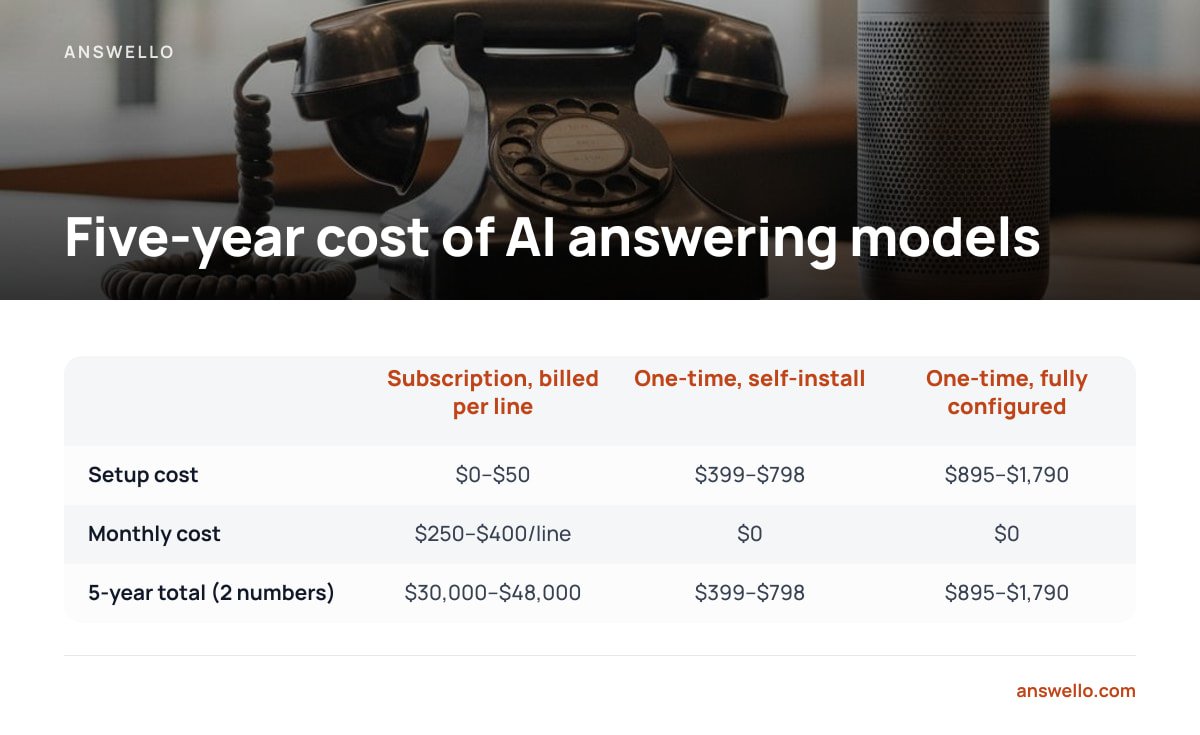
The cost of an unanswered call isn't the call itself — it's the job that walks to a competitor while you're mid-repair with wet hands and no way to pick up. Research by James Oldroyd and colleagues, published in Harvard Business Review, found that companies which tried to contact an online lead within an hour were nearly seven times as likely to qualify it as those that waited an hour longer. Trade calls aren't online leads, but the behavior is the same: the person calling you has a leak, a no-heat emergency, or a locked door right now, and they're already dialing the next name on the list if you don't pick up.
BrightLocal's ongoing consumer research consistently finds that people who can't reach a local business by phone don't wait around — they move to the next search result. A ringing, unanswered line isn't a neutral event. It's an active push toward your competitor.
Respond to a lead within an hour and you are nearly seven times as likely to qualify it as a business that waits an hour longer, according to research published in Harvard Business Review in 2011.
If you want to put real numbers against your own missed-call rate instead of a general study, our guide to what a missed call costs walks through how to estimate what a single missed emergency call is worth to a trade business based on average ticket size and close rate — most owners are surprised the number clears four figures a month.
Pro Tip: Before buying any AI call answering service, call your own business line from a phone it's never seen and pretend to be a customer with an odd, specific request — a mid-sized slab leak at 2 a.m., say. A good system asks a real follow-up question. A weak one repeats a canned script back at you regardless of what you said.
What to Look For Before You Buy
Caller Identification and Context, Not Just a Recording
The system should capture who's calling, their number, and what they actually need — not just store an audio file for you to listen to later. If the text you receive doesn't tell you enough to decide whether to call back from the job site or let it wait, it's not doing the job.
Text Summaries You Can Act On From the Truck
A transcript is nice. A one-line summary — name, issue, urgency, callback number — is what you actually read while standing in someone's crawl space. Look for both: the full record for your dashboard, the short version for your pocket.
Multi-Number and Multi-Brand Support Under One System
If you run more than one brand or number, ask directly whether that's one setup fee or a second subscription. This is the single biggest cost difference between providers, and it's often buried in the pricing page rather than stated upfront.
Setup Time and How Much Customization You Actually Get
Some systems are self-install in under an hour with a generic script; others are fully configured with a script written around your specific trade, hours, and service area. Neither is wrong — but know which one you're buying, since a generic script handling a plumbing emergency the same way it handles a routine quote request will frustrate callers. Our related guide on AI phone assistants for business covers how much setup customization actually changes call outcomes versus marketing claims.
Red Flags That Mean You're Buying a Subscription With Extra Steps
- Per-line pricing with no multi-brand option. If adding a second number means a second full monthly fee with no discount or bundled tier, you're paying for the vendor's billing structure, not extra capability.
- No cancellation path for add-ons. Any ongoing maintenance or tuning fee should be cancel-anytime. If it locks you into a term, that's a signal the core product isn't confident enough to earn your business month to month.
- Vague answers about data ownership. Ask who owns the call recordings and transcripts, and whether you can export them if you switch systems later. A provider that hedges on this is hoping you won't ask again.
- A demo that only handles the happy path. Test it with an angry caller, a wrong-number dial, and someone speaking fast with background noise. Plenty of systems look great on a scripted sales call and fall apart on a real Tuesday.
If you're specifically in plumbing or HVAC, our breakdowns of AI receptionists for plumbers and an AI phone answering system for plumbers go into the cost and setup differences specific to that trade in more detail than a general buyer's guide can.
Get Every Missed Call Turned Into a Text You Can Act On
Answello is built around the exact problem this article describes: a trade business that loses jobs to unanswered calls but doesn't want another monthly line item added to the stack of software it already pays for. The system answers missed calls, identifies who's calling and what they need, and texts you a summary and transcript — set up once, not billed forever. The self-install package is $399, a fully configured version with a custom script for your trade runs $895, and if you want someone to keep tuning it over time there's an optional $119-a-month plan you can cancel anytime. Multi-brand businesses run every number under a single one-time payment instead of a separate subscription per line.
The honest caveat: a one-time purchase means you're responsible for checking the spec sheet before buying — confirm it covers your call volume, your number count, and the trade-specific phrasing you need, because unlike a subscription there's no monthly re-negotiation if your business changes shape later.
Frequently Asked Questions
Is an AI call answering service the same thing as an AI receptionist?
The terms overlap heavily in marketing copy, but "answering service" usually emphasizes picking up missed calls and relaying details, while "receptionist" sometimes implies broader tasks like booking appointments directly into a calendar. Check the feature list rather than the label, since pricing and capability vary more within each category than between them.
How much does an AI call answering service typically cost per month?
Subscription-based providers commonly charge $200 to $500 per phone line per month, scaling up with call volume or added numbers. One-time purchase systems skip the recurring fee entirely, charging once for setup and, optionally, a small monthly fee for ongoing tuning that you can cancel anytime.
Can one system handle multiple business numbers or brands?
Some providers charge a separate monthly subscription per number, which gets expensive fast for multi-brand operators. Others, including one-time purchase systems, support multiple numbers or brands under a single setup payment — always confirm this before buying if you run more than one line.
Will callers know they're talking to an AI instead of a person?
Well-built systems typically disclose this upfront, which most callers accept without issue since they mainly want their request understood and relayed quickly. For trade calls — a leak, a no-heat emergency, a quote request — speed and accuracy matter more to the caller than who or what answered.
What happens if the AI can't answer a caller's specific question?
A good system collects the caller's details and request even if it can't resolve the question itself, then texts the business owner so a human can follow up with full context. The failure mode you want to avoid is a system that drops the call or loops the caller without capturing anything useful.
Sources
- Local Consumer Review Survey | BrightLocal
- Small Business Economic Trends | National Federation of Independent Business
Leave a Reply