

An out-of-hours call service is anything that handles your business phone after you close — a voicemail box, a live answering service, or an AI system — but the distinction that actually matters is whether a caller gets a usable response fast enough to stay a customer. Voicemail captures the call; it doesn't capture the job. Response speed, not availability, is what decides whether that call turns into revenue.
TL;DR:
- An out-of-hours call service ranges from passive voicemail to a live human agent to an AI system that answers, qualifies, and texts you a summary — "available" and "answered" are not the same claim.
- 24-hour customer service means reachable around the clock, not necessarily by a live person or an immediate reply; most "24-hour" lines are voicemail with a 9-to-5 callback.
- Free out-of-hours options exist (carrier voicemail-to-text, Google Voice) but none of them triage urgency or ask a second question, which is where jobs get lost.
- California's on-call pay rules, shaped by the Mendiola v. CPS Security Solutions decision, can make staffing an in-house after-hours rotation more expensive than it looks on paper.
- Speed-to-contact research tied to James Oldroyd's work, published through Harvard Business Review, shows the odds of reaching and qualifying a lead fall off within minutes, not hours.
Table of Contents
- What Counts as an Out-of-Hours Call Service, and What Doesn't
- How the Three Main Options Actually Compare
- What Is 24-Hour Customer Service, Really?
- How to Get a Human on the Phone When a Business Is Closed
- Is There a Free Out-of-Hours Call Service? What "Free" Actually Costs You
- California's After-Hours Rules Change the Staffing Math
- The Real Cost of a Missed Call After Hours
- Get Calls Answered After Hours Without Paying for It Every Month
- Frequently Asked Questions
- Sources
What Counts as an Out-of-Hours Call Service, and What Doesn't
An out-of-hours call service is anything that handles your business phone line once your regular hours end — nights, weekends, holidays, lunch breaks if you run a one-person shop. That's the broad definition, and almost anything you buy or set up will technically satisfy it. What the broad definition hides is that "handling" a call and "answering" it are not the same thing. A voicemail box handles the call. It does not identify the caller, understand what they need, or get you any closer to booking the job before you're back at your desk.
Three tiers exist in practice: passive voicemail, a live human answering service, and an AI system that picks up, asks a few qualifying questions, and reports back immediately. All three are genuine out-of-hours call services. Only two of them produce something you can act on before the caller has already phoned your competitor. If you're weighing these against each other for a specific business, this comparison of out-of-hours call handling options breaks down the cost and staffing trade-offs in more detail than most people need, but it's worth the ten minutes if you're deciding between them.
How the Three Main Options Actually Compare

| Option | What happens when the phone rings | Typical cost | Response speed | Best fit |
|---|---|---|---|---|
| Voicemail / answering machine | Caller leaves a message; you hear it whenever you check | Free to near-free | Hours to days | Businesses with very few after-hours calls |
| Live answering service (human) | Agent answers using your script, takes a message or books | $200–$600+/month per line, often with per-minute overage | Seconds, live | High-touch intake — legal, medical, anything needing nuance |
| AI call answering | System answers, asks questions, texts you a summary and transcript | Often a one-time setup cost, sometimes a small monthly tuning fee | Seconds, live, on every call | Trades and multi-brand businesses with repetitive call types |
The row most people underestimate is the first one. Voicemail looks free because no money changes hands, but the cost shows up as missed jobs, not a line item — which is exactly why it doesn't feel expensive until you start tracking it.
What Is 24-Hour Customer Service, Really?
Twenty-four hour customer service means a customer can reach your business and get some response at any hour, every day of the week. It does not mean the response is a live person, and it does not mean the response is immediate — both of those are separate promises that a business has to make on top of the base claim. A company advertising "24-hour support" might mean a live agent at 3 a.m., or it might mean a voicemail greeting that says someone will call back during business hours. Before you assume either, check how the specific business defines it, because the phrase alone tells you almost nothing about speed.
For a small service business, the honest version of 24-hour service is usually: calls get answered and sorted at any hour, and a human follows up during working hours unless it's flagged urgent. That's a realistic standard most trades businesses can hit without hiring night staff. The guide to what a 24-hour answering service costs and how it works walks through what "24-hour" actually buys you at different price points.
How to Get a Human on the Phone When a Business Is Closed

If you're the one calling and you hit a machine, a few tactics actually work. Press 0 or say "representative" or "agent" repeatedly — many automated systems, including AI call-answering setups, are built to route to a live person or escalate the request the moment they detect genuine urgency. Call back during the transition hour right at opening or closing, when staff are often still near the phone but the system hasn't switched modes yet. And if the system offers a text-back option, use it — a typed description of your problem gets read by a person faster than a voicemail gets listened to.
It's worth saying plainly: a well-built AI call-answering system is designed to make "get a human on the phone" less necessary, not more. If the system correctly identifies that your pipe is actively flooding versus you wanting a quote next month, you shouldn't need to fight through a menu to get a real response — the system should already be texting the business owner with exactly that distinction.
Is There a Free Out-of-Hours Call Service? What "Free" Actually Costs You
Yes — several free options exist. Most mobile carriers include voicemail-to-text transcription at no extra charge, and services like Google Voice will forward missed calls and transcribe voicemails for free. For a business that genuinely gets one or two after-hours calls a month, free voicemail is a reasonable choice, and there's no reason to pay for more than that.
The trade-off shows up the moment call volume rises above "occasional." Free voicemail options don't ask a second question, don't distinguish an emergency from a routine request, and don't do anything with the caller's answer except store it as audio you have to listen to manually. None of them text you a summary while you're still on the job site. If you're weighing free tools against paid alternatives, the breakdown of answering service alternatives and when not to pay monthly covers where the free tier stops being adequate for a business that depends on the phone for new work.
Pro Tip: Don't measure your missed-call problem by counting voicemails. Most callers who hit voicemail after hours hang up without leaving one and simply call the next business on their list — so your voicemail count understates the real loss. Pull your call log and count hang-ups under 15 seconds during closed hours; that number is closer to the truth.
California's After-Hours Rules Change the Staffing Math
If your plan for after-hours coverage is an in-house on-call rotation, California adds a wrinkle that doesn't exist everywhere. Following the California Supreme Court's decision in Mendiola v. CPS Security Solutions, guidance from the California Department of Industrial Relations treats on-call time as compensable work in many circumstances — specifically when an employer's restrictions on an employee's off-duty activities are significant enough that the time isn't truly their own. That means a technician required to stay sober, stay near their phone, and respond within a set number of minutes may need to be paid for those on-call hours, not just the hours they actually spend on a call.
This matters directly for the cost comparison in the table above. A business in California staffing a rotating on-call phone with employees isn't just paying for the minutes spent talking — it may be paying minimum wage or more for every hour someone is required to be reachable, which can make an in-house rotation far more expensive than it looks when you first price it out. It's one more reason trades businesses increasingly look at AI call answering or a flat-rate human service instead of building the rotation in-house.
The Real Cost of a Missed Call After Hours
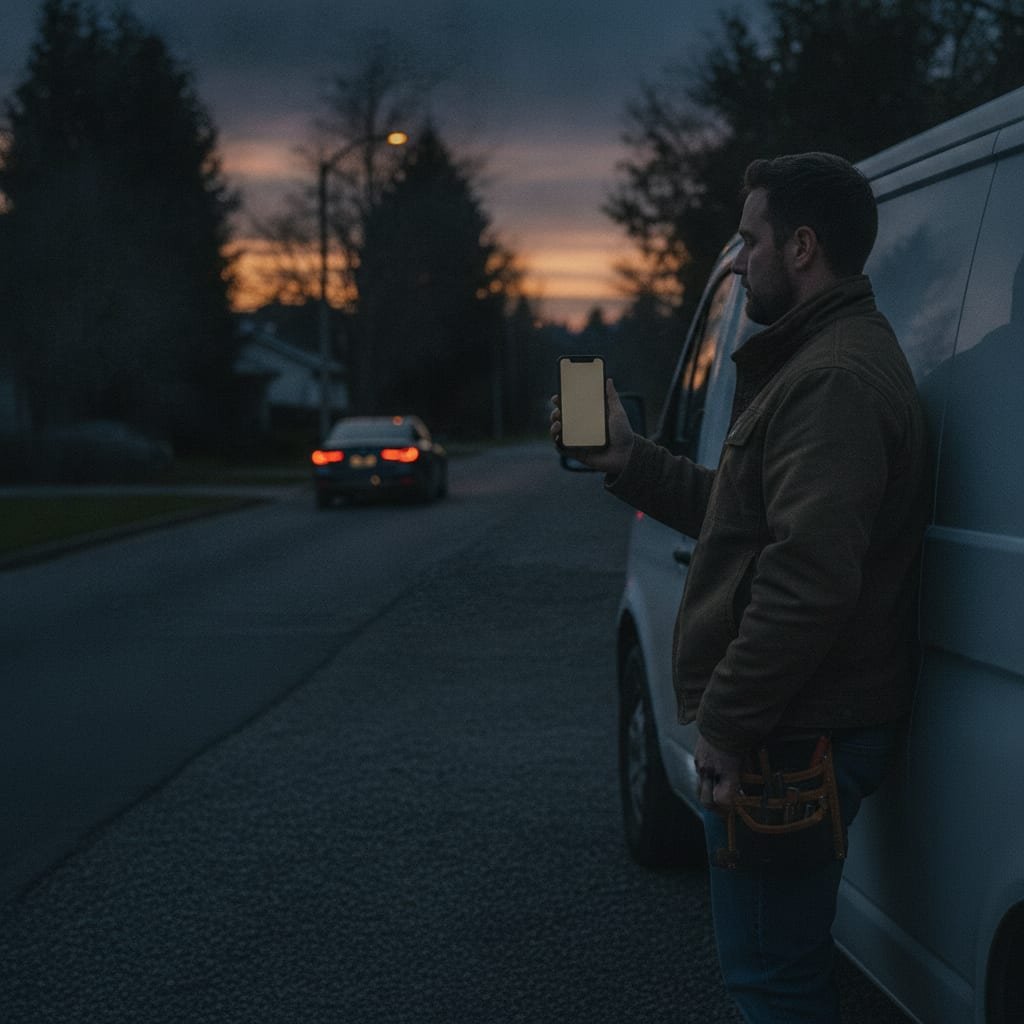
Speed is the variable that decides whether a missed call becomes a lost job. Research by James Oldroyd, published through Harvard Business Review, found that businesses attempting to contact a new lead within five minutes were dramatically more likely to actually reach and qualify that person than businesses that waited even thirty minutes — the odds of success fall off fast, and they don't recover.
Contact a lead within five minutes instead of thirty, and the odds of reaching and qualifying them change by roughly two orders of magnitude, according to the lead-response research James Oldroyd published through Harvard Business Review.
That research was done on sales leads, not plumbing emergencies, but the mechanism is the same: a caller with an urgent need who gets no response calls the next number on the list. An out-of-hours call service that only logs the call and waits for you to check it in the morning has already lost that race. One that texts you the caller's name, number, and request the moment they hang up at least gives you a shot at calling back before they've moved on.
Get Calls Answered After Hours Without Paying for It Every Month
If you've read this far, you already know the trade-off: voicemail is free and loses jobs, a human answering service is reliable and expensive every single month, and staffing it yourself gets complicated fast — especially in states like California where on-call hours can be compensable. Answello was built for the gap between those options — an AI system that answers missed calls, figures out who's calling and what they need, and texts you the caller's name, number, and request along with a transcript, all for a one-time payment instead of a recurring subscription. The self-install package runs $399, a fully configured version with a custom script for your business is $895, and an optional $119/month plan covers ongoing tuning and maintenance if you want it — cancel anytime, no obligation to keep paying.
One honest limit: Answello is built to triage and inform, not to dispatch a licensed technician to a gas leak at 2 a.m. For businesses with genuine life-safety emergencies, pair it with a clear escalation path and check the spec sheet before you assume it replaces every function of a human on-call rotation.
Frequently Asked Questions
What is 24 hour customer service?
It means a business can be reached at any hour of any day, but the phrase doesn't specify whether the response is a live person or an immediate one. Many "24-hour" lines are actually voicemail boxes with a promise to call back during normal business hours, so it's worth checking how a specific company defines it before you rely on it.
How do I speak to a live customer service agent after hours?
Press 0 or say "agent" or "representative" when you reach an automated system — most are built to escalate to a live person for anything that sounds urgent. Calling right at opening or closing time, when staff are often still near the phone, also improves your odds.
How do I get a human on the phone instead of a menu?
Say your issue plainly and use words like "emergency" or "urgent" if it genuinely is one, since many automated and AI-driven systems are designed to detect and escalate those cases immediately. If a text-back option is offered, use it — a written description often gets reviewed by a person faster than a voicemail gets played back.
Is there a free out-of-hours call service?
Yes — carrier voicemail-to-text and services like Google Voice are free and adequate if your business gets only a handful of after-hours calls a month. The trade-off is that free options don't ask follow-up questions or flag urgency, so higher call volumes tend to need something more structured.
Does California require businesses to pay staff for after-hours on-call time?
Often, yes. Following the Mendiola v. CPS Security Solutions decision, California treats on-call time as compensable work when an employer's restrictions limit what an employee can do with that time, even if no call actually comes in. This is a key reason some California businesses choose an answering service or AI system over an in-house on-call rotation.
Sources
- The Short Life of Online Sales Leads | Harvard Business Review
- On-Call Pay and Working Hours Guidance | California Department of Industrial Relations
- Stop Unwanted Robocalls and Texts | Federal Communications Commission
Leave a Reply