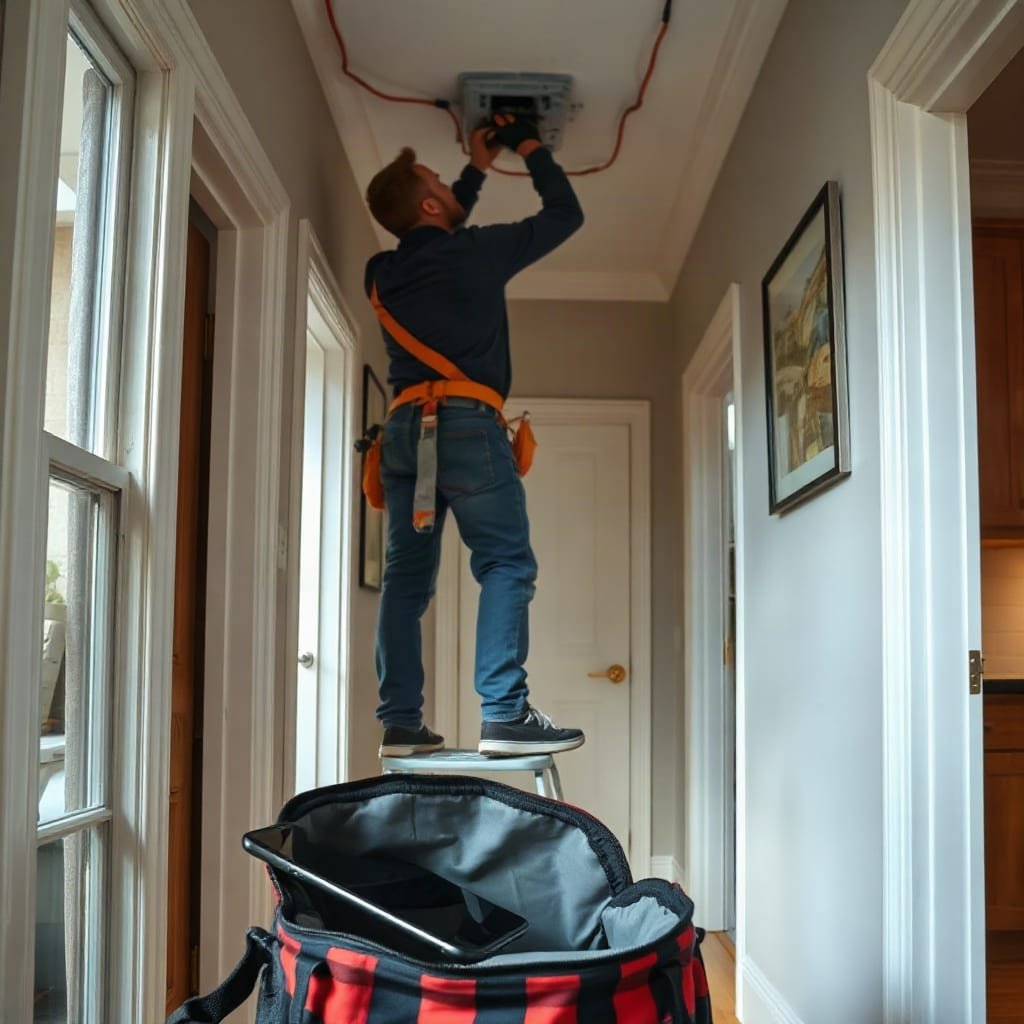
An answering service for busy trade jobs needs to do one thing a voicemail can't: capture the caller's name, number, and job details while you're elbow-deep in a panel or under a sink, then get that information to you in seconds. The real choice isn't between answering and not answering — it's between paying a human-staffed call center by the minute or paying once for AI software that never clocks out and never bills you per call.
TL;DR:
- A missed call on a job site is usually a lost job, not just a minor annoyance — homeowners call the next name on the list within minutes.
- Live answering services bill per minute or per call, which punishes your busiest, most profitable days the most.
- AI call answering picks up on the first ring, texts you the caller's name, number, and need, and works the same way across multiple brands or phone numbers.
- Setup options range from a $399 self-install to a fully configured $895 package with a custom script — pick based on how much time you have, not how much you want to spend.
- A one-time purchase with an optional $119/month tuning plan beats a forced monthly subscription for most small trade businesses.
Table of Contents
- Why Every Missed Call on a Job Site Costs You More Than You Think
- Answering Service for Busy Trade Jobs: Live Operators vs. AI Call Answering
- What a Trade-Ready Answering Service Has to Handle
- The Subscription Problem: Why Per-Minute and Per-Seat Pricing Hurts Trade Businesses
- DIY Setup vs. Done-For-You: Picking the Right Install for Your Crew
- What Happens After the Phone Is Answered: Texts, Transcripts, and Follow-Up
- Live Answering Service or AI System: Which One Should You Actually Buy
- Answer Every Job Call Without Adding a Monthly Bill
- Frequently Asked Questions
- Sources
Why Every Missed Call on a Job Site Costs You More Than You Think

A ringing phone you can't reach is not a neutral event. It's a sale walking toward whichever competitor answers next. Research published in Harvard Business Review found that companies attempting to contact a new lead within an hour were nearly seven times more likely to have a meaningful conversation with a decision-maker than those that waited even one hour longer. Trade work compresses that window even further — a homeowner with water on the floor or no AC in July isn't waiting for a callback, they're already dialing the next number.
Wait more than an hour to call someone back, and Harvard Business Review's lead-response research says your odds of a meaningful conversation drop nearly sevenfold.
The Bureau of Labor Statistics tracks construction and extraction occupations as a distinct category for good reason: most electricians, plumbers, and HVAC techs work alone or in small crews, with nobody left in the truck to pick up the phone while the job is running. That structural reality is exactly why trade businesses lose more revenue to missed calls than businesses with a front desk ever do.
Answering Service for Busy Trade Jobs: Live Operators vs. AI Call Answering

"Answering service" used to mean one thing: a call center with a human operator reading from a script, billing you per minute or per call handled. That model still exists, and it still works for businesses that need a live person to negotiate schedules or handle complex, branching conversations. But for most trades, the job of the phone call is simple — capture who's calling, what they need, and how urgent it is — and that's a job software now does faster and more consistently than a rotating shift of operators.
AI call answering picks up on the first ring, asks the caller what they need in plain language, and texts you a summary before you've finished the task you were doing. There's no hold music, no operator variance between shifts, and no per-minute meter running while a caller explains their situation. If you want the full cost breakdown on how these systems are priced across the industry, this cost guide walks through it line by line.
What a Trade-Ready Answering Service Has to Handle
A generic answering service built for medical offices or law firms doesn't map cleanly onto trade work. Trade calls have their own patterns, and a system that ignores them will frustrate callers and waste your time.
Multiple Brands, One Phone Habit
Plenty of trade owners run more than one number — a primary brand and a secondary service line, or separate numbers for residential and commercial work. A system worth buying needs to handle all of those under one setup rather than charging you per line or per brand, since juggling five logins for five numbers defeats the purpose of simplifying your calls in the first place.
After-Hours and Emergency Calls
A burst pipe at 11 p.m. is a different conversation than a routine maintenance request at 2 p.m. The system needs to flag urgency in the text it sends you — not promise a dispatch time it can't guarantee, just make clear this one can't wait until morning.
Triage Without False Promises
The biggest risk with any automated system is overpromising. A good setup tells the caller someone will follow up shortly and collects the details; it never invents an arrival window or commits you to a price over the phone. That distinction protects you from complaints before they start.
The Subscription Problem: Why Per-Minute and Per-Seat Pricing Hurts Trade Businesses
Live answering services typically charge by the minute or by the call, on top of a base monthly plan. That pricing model punishes you precisely when business is good — a slammed Monday after a storm generates the call volume that runs up your bill the most. Multi-brand owners get hit twice, often paying separate monthly fees for each number or each "seat" on the plan.
Live answering services often bill $1 to $2 per minute. A $399 one-time AI system can pay for itself in under a day of a busy call volume.
Pro Tip: When you test any answering system — live or AI — call it during your actual busiest hour, not a quiet afternoon. Most demos happen on slow traffic, which hides exactly the failure mode you're trying to avoid: a system that chokes when three calls stack up at once.
If you're comparing this against other texting-and-consent requirements, know that the Federal Communications Commission's rules under the Telephone Consumer Protection Act govern how businesses can text customers, which matters if your system is sending automated texts back to callers rather than just summarizing to you privately. A system that only texts the owner, not the customer, sidesteps most of that complexity entirely.
DIY Setup vs. Done-For-You: Picking the Right Install for Your Crew
| Setup Type | Typical Time to Live | Cost | Best For |
|---|---|---|---|
| Self-install | 1–2 hours | $399 one-time | Owners comfortable with basic call-forwarding settings |
| Done-for-you with custom script | Same day | $895 one-time | Multi-brand shops who want it configured once, correctly, without DIY risk |
| Ongoing tuning plan | N/A (add-on) | $119/month, cancel anytime | Businesses whose services or scripts change often |
The choice here is mostly about time, not technical skill. A self-install is genuinely doable in an afternoon if your call-forwarding settings are straightforward. A done-for-you setup with a custom script costs more upfront but removes the risk of a half-configured system missing calls during your busiest week — which is the exact week you can least afford to troubleshoot it yourself.
What Happens After the Phone Is Answered: Texts, Transcripts, and Follow-Up
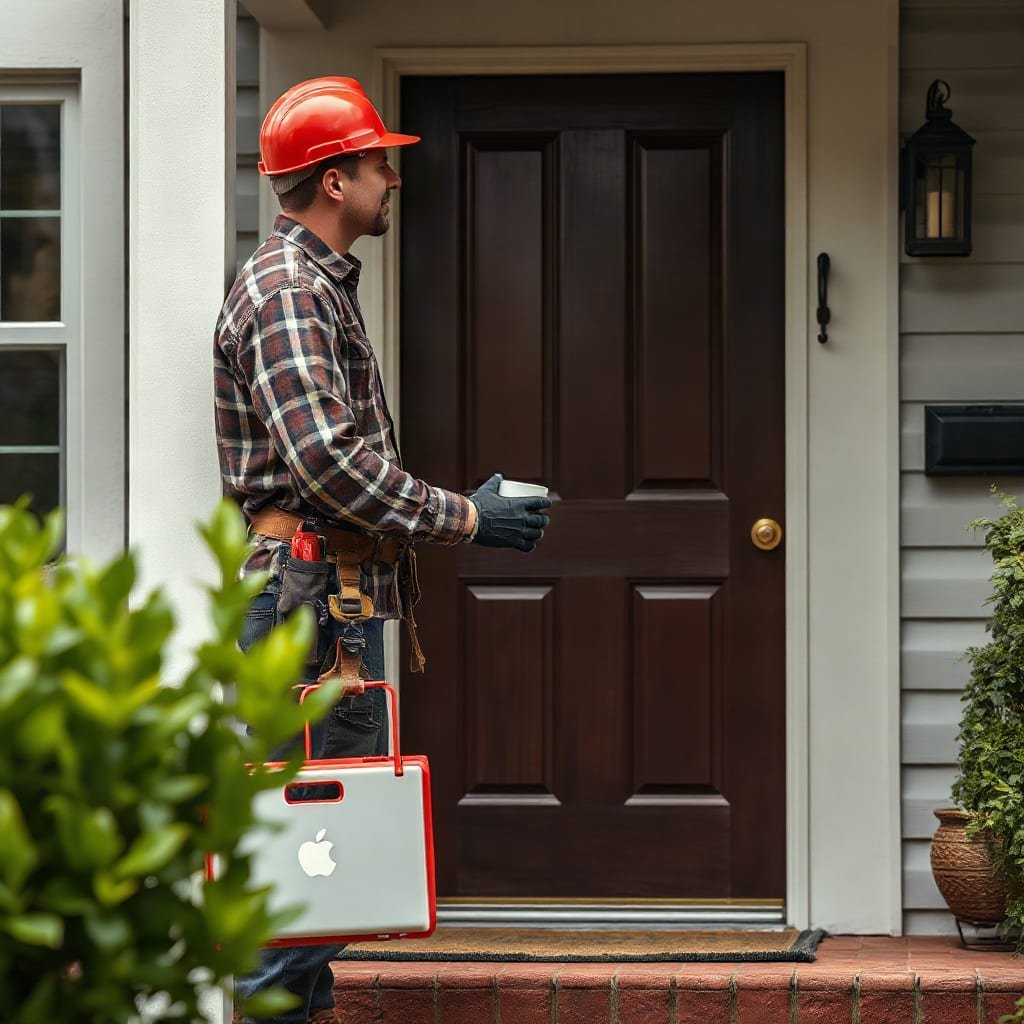
The call being answered is only step one. What matters is what happens in the sixty seconds after it ends. A well-built system texts you the caller's name, number, and stated need immediately, so you can glance at your phone between jobs and decide what needs a callback now versus at lunch. A dashboard with recordings and transcripts matters too — it's the difference between trusting a summary and being able to check the exact words a caller used when a job turns into a dispute later.
Call recording also carries legal weight depending on where you operate; several states require both parties to consent before a call is recorded, so any system worth buying should handle that disclosure automatically rather than leaving it to you to remember on every call.
Live Answering Service or AI System: Which One Should You Actually Buy
If you run a single-location trade business with simple scheduling needs, an AI call-answering system is the clear pick — it costs less over time, works identically on your busiest and slowest days, and doesn't require managing a vendor relationship with monthly invoices. A live service still earns its keep if you genuinely need a human to negotiate complex multi-step bookings or speak multiple languages fluently in real time, which most residential trade calls don't require.
For a closer look at how this plays out by trade, the setups for electricians, HVAC companies, and plumbers each have slightly different call patterns worth knowing before you buy.
Answer Every Job Call Without Adding a Monthly Bill
Answello is built for exactly the problem this article describes: a trade business that loses jobs to missed calls but doesn't want another recurring SaaS bill stacked on top of insurance, fuel, and materials. It answers calls your crew can't get to, identifies the caller and what they need, and texts you a summary and transcript — across multiple brands or numbers if that's how your business runs, all under one payment.
The self-install runs $399 one-time; the fully configured version with a custom script is $895 one-time; an optional $119/month plan covers ongoing tuning if your services change often, and you can cancel it anytime without losing the system itself. The honest caveat: it answers and triages calls — it doesn't dispatch crews or run your whole scheduling calendar, so check the spec sheet against what you actually need before you buy.
Frequently Asked Questions
What's the difference between a live answering service and an AI answering service for trades?
A live answering service uses human operators who bill by the minute or per call, while an AI answering service uses software that answers instantly, identifies the caller's need, and texts a summary to the owner. For most trade businesses, the AI option costs less over time and performs consistently regardless of call volume.
Can one answering system handle multiple business brands or phone numbers?
Yes, as long as the system is built for it — some AI call-answering setups support multiple brands or numbers under a single configuration and payment, which matters for trade owners running more than one service line. Confirm this before buying, since not every provider supports it without extra per-line fees.
Is a one-time purchase answering system actually cheaper than a monthly subscription?
Over a year or more, yes, because a one-time fee stops accumulating cost once paid, while a monthly subscription keeps billing regardless of how many calls you actually receive. The math favors a one-time purchase most clearly for businesses with steady, predictable call volume rather than wildly seasonal spikes.
How fast does a trade business need to respond to a missed call?
Research on lead response times suggests contacting a caller within the first hour dramatically improves the odds of a meaningful conversation, and trade callers with urgent needs often move on even faster than that. An instant text summary of who called and why lets you respond within minutes rather than at the end of the day.
Do I need a custom script for an AI answering system, or is a generic one fine?
A generic script works for simple call capture, but a custom script performs better for multi-brand businesses or anyone offering several distinct services, since it can ask the right follow-up questions for each. A done-for-you setup typically includes this scripting work as part of the install.
Sources
- The Short Life of Online Sales Leads | Harvard Business Review
- Telephone Consumer Protection Act | Federal Communications Commission
- Construction and Extraction Occupations | U.S. Bureau of Labor Statistics
Leave a Reply